



Venlafaxine and Duloxetine: Pooled Analysis Shows No Increase in Risk of Malformations
Women face difficult choices when deciding whether or not to continue psychiatric medications during pregnancy. This choice can be especially difficult for women taking newer medications which lack adequate reproductive safety data. While we have adequate data regarding the reproductive safety of most of the selective serotonin reuptake inhibitors (SSRIs), there has been less information available on the serotonin norepinephrine reuptake inhibitors (SNRIs): venlafaxine (Effexor) and duloxetine (Cymbalta). A recent article, [...]

October 2015 Roundup: Recent Publications in Reproductive Psychiatry
When we started our website 15 years ago, a productive month in the field of reproductive psychiatry meant that a few good articles were published. Times have certainly changed. In fact, it is sometimes difficult to keep up with the increasing number of publications in this rapidly growing field. It is clearly impossible to cover all of the articles on our website, but it is important to let our readers [...]
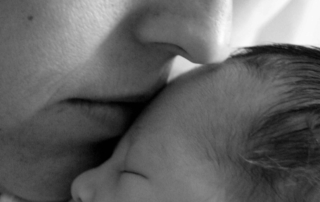
Breastfeeding Difficulties May Lead to Postpartum Depression
For decades, researchers have postulated a connection between breastfeeding and postpartum depression (PPD). However, the research examining the association between postpartum depression and breastfeeding has been somewhat difficult to interpret. While many believe that breastfeeding prevent postpartum depression, this has not been a consistent finding. A new study suggests that postpartum depression may be more common in women who attempt to breastfeed but experience difficulties doing so. In this study, researchers [...]
![By Vera Kratochvil [Public domain], via Wikimedia Commons](https://womensmentalhealth.org/wp-content/uploads/2015/06/Mother_Kissing_Baby-320x202.jpg)
Screening for Postpartum Depression Isn’t Enough
About ten years ago, we ran a collaborative project with our obstetrics department here at MGH where we screened all new mothers for postpartum depression. The screening went well. Nearly all the women completed the Edinburgh Postnatal Depression Scale (EPDS) at their 6-week postpartum visit. We contacted the women with scores on the EPDS suggestive of postpartum depression. Everything seemed like it was going smoothly. But how many women actually came [...]
In Brief: Higher Thyroid Function During Pregnancy May Negatively Affect Brain Development
It is well established that during pregnancy maternal hypothyroidism may have negative effects on the developing fetal brain. New data presented at the 2015 International Thyroid Congress and Annual Meeting of the American Thyroid Association (ITC/ATA) suggests that maternal hyperthyroidism, or higher than normal levels of thyroxine (T4), in early pregnancy may also have negative effects, including lower IQ, in offspring assessed at six years of age. In addition, the researchers [...]

The Postpartum Stressors Scale: A Tool For Identifying Postpartum Women at Risk
Stressful life events occurring during pregnancy and the postpartum period have consistently been identified as a risk factor for perinatal mood and anxiety disorders. While we have instruments to assess for stressful life events and to measure perceived stress, such as the well-established Holmes and Rahe Stress Scale, these tools do not necessarily assess factors specific to pregnant and postpartum women. For example, these scales do not address breastfeeding problems, sleep [...]