


Does Cesarean Delivery Increase Risk for Postpartum Depression?
Cesarean delivery is linked to a small increase in postpartum psychiatric risk, but stronger predictors—like prior mental illness—remain more clinically important.

Cesarean delivery is linked to a small increase in postpartum psychiatric risk, but stronger predictors—like prior mental illness—remain more clinically important.

Emerging data suggest that severe sleep loss around labor and delivery may mediate the link between bipolar disorder and postpartum psychosis, offering new targets for prevention.

Women with premenstrual mood disorders face significantly higher risk of suicidal ideation and behavior, highlighting the need for careful assessment and targeted prevention.
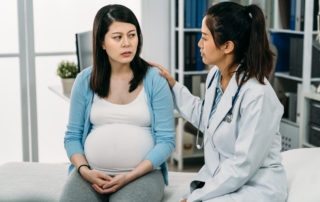
There is evidence that depression itself can increase risk for preeclampsia. In women with more severe depression, treatment with an SSRI antidepressant may decrease risk.

ADHD is an important risk factor for both depression and anxiety disorders in the postpartum period and should be considered in the post-pregnancy maternal care.
Women with medical, psychiatric, and obstetric risk factors should be closely followed within pregnancy and the postpartum.
Imagine if we could use machine learning to enhance the care we deliver, analyzing a larger body of patient-specific factors in order to make more reliable predictions of risk for perinatal mood and anxiety disorders.
There is evidence that depression itself can increase risk for hypertension and preeclampsia. Future studies will help to clarify the complex interaction between depression, SSRI treatment and pre-eclampsia.
Opioid use during pregnancy co-occurs with other variables that are associated with worse outcomes in children, specifically maternal depression and the use of alcohol, tobacco, and other drugs.

Announcing a new CWMH study on postpartum depression screening and treatment outcomes at Mass General Brigham.