

Treatment

Desvenlafaxine for the Treatment of Menopausal Hot Flushes

Last Friday, Wyeth received FDA approval for the antidepressant desvenlafaxine succinate (marketed under the name Pristiq), a metabolite of venlafaxine or Effexor. Although this drug was approved for the treatment of major depression, a recent study has demonstrated that desvenlafaxine could be an effective treatment for vasomotor symptoms in postmenopausal women.


By |2015-08-11T10:37:31-04:00March 7th, 2008|Medication, Menopausal Symptoms, Treatment|Comments Off on Desvenlafaxine for the Treatment of Menopausal Hot Flushes

ECT and Pregnancy

Electroconvulsive therapy (ECT) is one of the most effective treatments for depression, with response rates that are consistently higher than those observed in clinical trials of antidepressants. Furthermore, ECT may be more effective than medications for treatment-refractory depression. The American Psychiatric Association (APA) recommends ECT for patients who have had previous positive response to ECT or who are non-responsive to pharmacological treatments, as well as for those patients who experience severe psychiatric symptoms, including depression with psychosis. suicidal ideation, and mania.

By |2018-07-11T13:49:02-04:00January 30th, 2008|Psychiatric Disorders During Pregnancy, Treatment|Comments Off on ECT and Pregnancy

Nutritional Supplements for Premenstrual Syndrome: Do They Work?

Many promote the use of certain vitamins and minerals for the treatment of premenstrual syndrome (PMS) and premenstrual dysphoric disorder (PMDD), but controlled studies supporting the use of nutritional supplements are sparse.

By |2015-07-28T11:22:36-04:00January 24th, 2008|Alternative & Complementary, PMS & PMDD, Treatment|Comments Off on Nutritional Supplements for Premenstrual Syndrome: Do They Work?

What About Vagus Nerve Stimulation?

Vagus Nerve Stimulation, or VNS, has been available for the treatment of epilepsy since 1997 and was approved by the FDA for the adjunctive treatment of refractory depression in 2005. VNS relies upon the use of a surgically implanted device which delivers periodic stimulation to the vagus nerve. How VNS therapy works is not completely understood; however, several studies have suggested that this technique may be effective for some patients with treatment-resistant depression.

By |2015-07-28T11:13:00-04:00December 14th, 2007|Depressive Disorders, Psychiatric Disorders During Pregnancy, Treatment|Comments Off on What About Vagus Nerve Stimulation?

Cognitive Therapy versus Medication in the Treatment of Depression

Both antidepressant medications and cognitive therapy have been shown to be effective for the treatment of depression; however, the question remains as to whether one treatment is preferred over the other. Subjects enrolled in The Sequenced Treatment Alternatives to Relieve Depression (STAR*D) study (men and women with major depression, ages 18-75) were initially treated with citalopram, an SSRI. Those who had unsatisfactory outcomes after initial treatment were eligible for a randomized second-step treatment trial in which they switched to a new treatment (either cognitive therapy or a different antidepressant) or augmented the citalopram regimen with either cognitive therapy or a different antidepressant.

By |2015-07-28T11:03:46-04:00November 26th, 2007|Depressive Disorders, General, Medication, Psychotherapy, Treatment|Comments Off on Cognitive Therapy versus Medication in the Treatment of Depression

Oral Contraceptives for the Treatment of Premenstrual Mood Symptoms

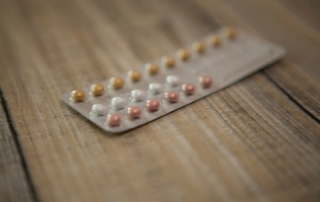
Oral contraceptives are commonly prescribed for the treatment of premenstrual symptoms and premenstrual dysphoric disorder (PMDD); however, the evidence supporting the use of oral contraceptives in this setting is limited. While most studies have shown that oral contraceptives are not effective for the treatment of premenstrual symptoms, there is preliminary evidence that a new oral contraceptive pill, Yaz, which contains low-dose estrogen and a novel progestin called drospirenone, may alleviate the symptoms of PMDD.

By |2015-07-28T10:57:47-04:00November 13th, 2007|Hormone Therapy, PMS & PMDD, Treatment|Comments Off on Oral Contraceptives for the Treatment of Premenstrual Mood Symptoms

Paroxetine CR May Be Helpful for Menopausal Women Discontinuing Hormone Therapy

Estrogen was first approved by the FDA for the treatment of menopausal symptoms in 1942, and for many decades estrogen replacement therapy had been widely prescribed for peri- and post-menopausal women. In 2002, however, data from the Women’s Health Initiative (WHI) suggested that hormonal therapy may be associated with an increased risk of breast cancer and cardiovascular disease. These findings have led to a dramatic decrease in the use of hormone replacement therapy (HRT), with many women abruptly discontinuing its use.

By |2015-07-28T10:53:58-04:00November 12th, 2007|Menopausal Symptoms, Treatment, Vasomotor Symptoms|Comments Off on Paroxetine CR May Be Helpful for Menopausal Women Discontinuing Hormone Therapy

New Book: A Deeper Shade of Blue: A Women’s Guide to Recognizing and Treating Depression in Her Childbearing Years, by Ruta Nonacs, MD. (Simon and Schuster, 2006)

Depression affects women almost twice as often as men, with about one in four women suffering from it in her lifetime. While depression may strike at any time, studies show that women are particularly vulnerable during their childbearing years.

By |2024-05-16T06:50:03-04:00July 30th, 2006|Postpartum Psychiatric Disorders, Psychiatric Disorders During Pregnancy, Treatment|Comments Off on New Book: A Deeper Shade of Blue: A Women’s Guide to Recognizing and Treating Depression in Her Childbearing Years, by Ruta Nonacs, MD. (Simon and Schuster, 2006)
Go to Top