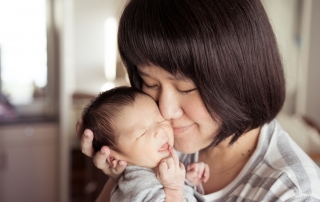
postnatal depression

Positive Parenting Can Reduce Risk for Postpartum Depression

A recent study investigated the effectiveness of two pediatric primary care interventions for reducing the risk for postpartum depressive symptoms. The researchers tested two interventions designed to promote parental responsiveness: Video Interaction Project (VIP) is [...]


By |2015-08-07T14:38:31-04:00April 15th, 2014|Postpartum Depression, Postpartum Psychiatric Disorders, Prevention, Psychotherapy|Comments Off on Positive Parenting Can Reduce Risk for Postpartum Depression

Understanding the Heterogeneity of Perinatal Depression

Most studies evaluating the prevalence of perinatal depression are cross-sectional, meaning that depressive symptoms are measured at a single point in time.  Less information is available regarding the trajectory of perinatal depression.  In obstetric populations, it seems that there are women with briefer episodes of milder postpartum depressive symptoms, while others have more persistent and debilitating depressive symptoms after childbirth.  Other women experience depression during pregnancy.  Several studies suggest that there is considerable heterogeneity among women who experience depressive symptoms during pregnancy and the postpartum period.

By |2014-02-24T15:24:57-04:00February 24th, 2014|Psychiatric Disorders During Pregnancy|Comments Off on Understanding the Heterogeneity of Perinatal Depression

New Baby 101: Practical Intervention Strategy Reduces the Risk of Postpartum Depression

An intervention teaching new parents about normal infant sleeping and crying patterns and providing them with techniques for infant settling improves mothers' depression scores. There were no differences in scores on the Edinburgh Postnatal Depression Scale (EPDS) at 4 months, but at 6 months, caregivers in the intervention group were almost half as likely to score higher than 9 on the EPDS, with 7.9% scoring higher than 9 in the intervention group vs. 12.9% in the control cohort (adjusted odds ratio [AOR], 0.57).

By |2015-08-07T14:53:22-04:00January 13th, 2014|Postpartum Depression, Postpartum Psychiatric Disorders, Prevention, Psychotherapy|Comments Off on New Baby 101: Practical Intervention Strategy Reduces the Risk of Postpartum Depression

Interpersonal Therapy Based Intervention Reduces the Risk of Postpartum Depression in Teen Mothers

Postpartum depression (PPD) is a relatively common problem, affecting between 10% and 15% of women after delivery. Although it is difficult to reliably predict which women in the general population will experience postpartum mood disturbance, it is possible to identify certain subgroups of women who are more vulnerable.   One such group is teen mothers, where the risk of PPD is about 25%.

By |2015-08-07T14:39:54-04:00October 30th, 2013|Postpartum Depression, Postpartum Psychiatric Disorders, Prevalence & Risk Factors, Psychotherapy|Comments Off on Interpersonal Therapy Based Intervention Reduces the Risk of Postpartum Depression in Teen Mothers

Antenatal Exposure to Depression or Anxiety Increases the Risk of Adolescent Depression

Many studies have demonstrated an increased risk for depression among the children of mothers with depression.  Exactly how this vulnerability to depression is transmitted to the child is not precisely understood.  Genetic factors clearly play an important role, but there are other important factors which contribute to the intergenerational transmission of depression.  For example, many studies have shown that postpartum depression may contribute to parenting styles which increase a child’s likelihood of developing depression later on.   While the child appears to be particularly sensitive to the effects of maternal depression during the first year of life, it appears that older children are also affected by maternal depression and are more likely to suffer from depression and other psychiatric symptoms than children with non-depressed mothers.

By |2020-11-26T08:39:58-04:00October 23rd, 2013|Anxiety Disorders, Child Outcomes, Depressive Disorders, Psychiatric Disorders During Pregnancy|Comments Off on Antenatal Exposure to Depression or Anxiety Increases the Risk of Adolescent Depression

Complementary and Alternative Medicine Therapies for the Treatment of Perinatal Depression: A Review

In an excellent and thoughtful review article, Kristina Deligiannidis and Marlene Freeman (from the MGH Center for Women’s Mental Health) summarize data on the efficacy of complementary and alternative medicine therapies for the treatment of perinatal depression.  This is one of the most thorough reviews on CAM and provides thoughtful, evidence-based recommendations regarding the use of these treatments for women with perinatal depression.  It is definitely worth tracking down a copy of this review, but if you can’t find it, here is a summary.

By |2015-08-05T14:29:47-04:00September 30th, 2013|Alternative & Complementary, Depressive Disorders, Postpartum Depression, Postpartum Psychiatric Disorders, Psychiatric Disorders During Pregnancy, Treatment|Comments Off on Complementary and Alternative Medicine Therapies for the Treatment of Perinatal Depression: A Review

Postpartum Depression in Women with Babies in the NICU

Having a newborn child to the neonatal intensive care unit (NICU) is stressful to parents.  It would be easy to imagine that in this environment, women may be more vulnerable to postpartum depression (PPD).  A recent study assessed the incidence of PPD in a total of 131 mothers with infant admitted to the NICU.

By |2015-08-06T09:06:17-04:00August 13th, 2013|Postpartum Psychiatric Disorders|Comments Off on Postpartum Depression in Women with Babies in the NICU

Screening for Postpartum Depression: New Data on the EPDS

For women the postpartum period is a time of increased vulnerability to mood disorders.  Recent estimates indicate that about 20% of women will suffer from significant depressive symptoms during the year after the birth of a child.  Despite a significant push over the last decade to identify and effectively treat women with mood disorders during pregnancy and the postpartum period, treatment rates in this population remain unacceptably low.  Furthermore, questions still remain regarding the optimal timing of screening and the best instruments to be used in this setting.

By |2015-08-06T11:59:45-04:00April 2nd, 2013|Postpartum Psychiatric Disorders|Comments Off on Screening for Postpartum Depression: New Data on the EPDS

Facilitating Smoking Cessation in Pregnant Women: An Innovative Web-Based Training for Healthcare Professionals

Women who smoke during pregnancy are at greater risk for certain complications, including placental previa, placental abruption, and premature rupture of the membranes, and premature delivery.  Furthermore, infants of mothers who smoke during pregnancy are more likely to be small for gestational age and are at greater risk of sudden infant death syndrome (SIDS).

By |2015-08-10T15:42:16-04:00October 27th, 2012|Nicotine, Perinatal Substance Use, Prevention|Comments Off on Facilitating Smoking Cessation in Pregnant Women: An Innovative Web-Based Training for Healthcare Professionals
Go to Top