


Beyond Screening: Supporting the Mental Health of NICU Parents
Parents of infants in the NICU face high rates of depression, anxiety, stress, and trauma. Are we doing enough to identify their needs—and provide meaningful mental health support?
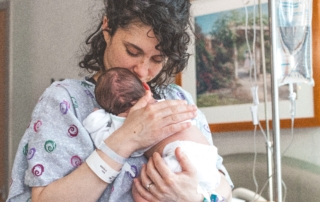
Parents of infants in the NICU face high rates of depression, anxiety, stress, and trauma. Are we doing enough to identify their needs—and provide meaningful mental health support?
A new cohort study from Australia found that lithium use during pregnancy was linked to a two-fold increased risk of spontaneous preterm birth, along with higher risks of a large for gestational age infant and congenital cardiac malformations. We review how these findings compare with prior research and what they mean for women with bipolar disorder who are using — or considering — lithium during pregnancy.
New prospective data on 56 first-trimester vortioxetine exposures found no major malformations, offering reassuring but still preliminary reproductive safety information.
New registry data found no major malformations among 58 infants exposed to cariprazine in the first trimester, offering reassuring but preliminary reproductive safety evidence.

Dysphoric Milk Ejection Reflex causes brief, intense waves of dysphoria at milk letdown, often misinterpreted as postpartum depression, and can undermine breastfeeding and maternal well-being.

Evidence linking prenatal cannabis to major malformations is mixed, but signals for rare defects like gastroschisis and omphalocele support caution regarding the use of cannabis in pregnancy.

A large meta-analysis finds no causal link between prenatal antidepressant exposure and neurodevelopmental disorders after accounting for confounding factors.

Postpartum psychosis is a psychiatric emergency. Evidence supports early use of lithium plus antipsychotics—and, when needed, ECT—to achieve remission and prevent relapse.

Lithium orotate is a lithium salt marketed as a supplement, but we do not have evidence that it is an effective or safer mood stabilizer, and it should not be used as a substitute for standard lithium treatment in pregnancy.

An open-label pilot study suggests that intravenous brexanolone may rapidly reduce psychotic, manic, and depressive symptoms in patients with postpartum psychosis, highlighting a potential new treatment option.