


Use of Hormonal Contraception in Women with Coexisting Medical Conditions
Is the use of hormonal contraception safe for women older than 35 years?
Is the use of hormonal contraception safe for women older than 35 years?
Many women have concerns about the side effects of oral contraceptives (birth control pills). Potential side effects include bloating, breast tenderness, and weight gain. In addition, some women may experience depression or mood swings, side effects that may influence a woman’s decision to start taking a birth control pill, particularly if she has a history of depression.

Up to 25% of women experience migraine headaches during their reproductive years; often migraine headaches may be triggered or exacerbated by hormonal changes. It has been estimated that 7-14% of women experience migraines only during the premenstrual or menstrual phase of their cycles. Another 52-70% experience headaches throughout the month but note increased headache activity before or during menses.

Both antidepressant medications and cognitive therapy have been shown to be effective for the treatment of depression; however, the question remains as to whether one treatment is preferred over the other. Subjects enrolled in The Sequenced Treatment Alternatives to Relieve Depression (STAR*D) study (men and women with major depression, ages 18-75) were initially treated with citalopram, an SSRI. Those who had unsatisfactory outcomes after initial treatment were eligible for a randomized second-step treatment trial in which they switched to a new treatment (either cognitive therapy or a different antidepressant) or augmented the citalopram regimen with either cognitive therapy or a different antidepressant.

Polycystic ovarian syndrome (PCOS) occurs in 4-7% of women and is characterized by irregular menstrual cycles and hyperandrogenism (facial hair, acne, male-pattern hair loss, acne, or elevated male hormone levels). The majority of women with PCOS also suffer from obesity and insulin resistance. PCOS has been associated with a spectrum of health problems including infertility, diabetes, and possibly heart disease and endometrial cancer. Recently there has been concern that women with bipolar disorder who are treated with the mood stabilizer valproate (VPA; brand name Depakote or Depakene), may be at higher risk for PCOS, although the data have been somewhat conflicting.

A recent article published in Psychiatric Times reviews options for the management of antidepressant-induced sexual dysfunction. According to this review, sexual side effects may occur in 40% to 70% of patients treated with serotonin reuptake inhibitors (SRIs) and is a common reason for poor compliance with treatment and eventual discontinuation. When sexual side effects occur, they tend to emerge early, are persistent, and rarely resolve spontaneously.
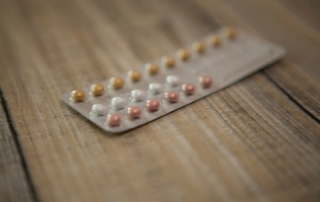
Lee S. Cohen, MD, and Hadine Joffe, MD, MSc, shared their expertise in reproductive health and oral contraceptives (OC) for Elle magazine’s recent article, “Against the Flow.” The article discusses Lybrel, the first continuous OC approved by the Food and Drug Administration (FDA). This new birth control pill has received attention because its continual low dose of estrogen and progestin completely eliminates monthly bleeding in women. It is 98 percent effective in preventing pregnancy, provides long-term health benefits, and eliminates what many women consider the “hassles” of menstruation.

Preliminary reports have suggested that menstrual irregularity may occur more commonly in women with mood disorders than in the general population. What has been unclear, however, is whether these menstrual cycle irregularities reflect an underlying disruption of the hypothalamic-pituitary-gonadal (HPG) axis in women with mood disorders or are caused by the psychotropic medications used to treat these psychiatric disorders.In a recent study, Dr. Hadine Joffe of the Center for Women’s Mental Health and her colleagues assessed the prevalence of menstrual cycle dysfunction in 3 groups of women: (1) with bipolar disorder, (2) with unipolar depression, or (3) with no psychiatric illness (Joffe 2006).