Depressive Disorders

Heavy Menstrual Bleeding More Common in Midlife Women with Histories of Depression

Menstrual problems are common among premenopausal women and become more frequent with increasing reproductive age, especially just before and during perimenopause.  In the Study of Women's Health Across the Nation, a multisite study of menopause and aging, information regarding menstrual history was collected in a total of 934 premenopausal and early perimenopausal women between the ages of 42 and 52.  History of major depression was associated with an increased likelihood of heavy bleeding (odds ratio, 1.89), adjusting for recent major depression, menopause status, and other confounding factors. History of depression was not associated with other abnormal bleeding or premenstrual symptoms. Future longitudinal studies are needed to explore why past depression increases the likelihood of subsequent heavy menstrual bleeding in midlife women.  One possibility is that irregular fluctuations in estrogen levels may be responsible for both abnormal menstrual bleeding, as well as the dysregulation of neurotransmitter systems that mediate depressive symptoms.

By |2015-08-12T16:16:56-04:00May 22nd, 2012|Depressive Disorders, Menopausal Symptoms, Prevalence & Risk Factors|Comments Off on Heavy Menstrual Bleeding More Common in Midlife Women with Histories of Depression

Children of Depressed Mothers Exposed to Multiple Risk Factors for Psychopathology

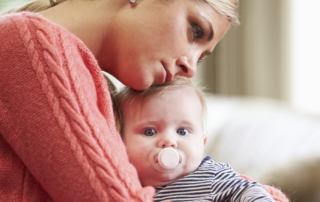
Multiple studies have concluded that the children of depressed mothers are at increased risk for behavioral problems and other mental health issues.   Data from 7429 mother–child pairs participating in the Avon Longitudinal Study of Parents and Children in the UK indicate that maternal depression (assessed when the children were 1.5 year old) is associated with an increased risk of psychiatric diagnoses in the children at 7.5 years of age.

By |2015-08-12T16:45:37-04:00March 12th, 2012|Depressive Disorders, Long-Term Outcomes, Outcomes, Postpartum Depression, Postpartum Psychiatric Disorders|Comments Off on Children of Depressed Mothers Exposed to Multiple Risk Factors for Psychopathology

Aerobic Training Improves Menopausal Symptoms and Mood

In this randomized clinical trial, 154 sedentary, symptomatic women were randomly assigned to an aerobic training or a control group. The intervention included unsupervised aerobic training for 50 minutes four times weekly for 24 weeks, whereas the control group attended health lectures twice a month.  Night sweats, mood swings, and irritability were reduced more among the women in the intervention group than in the control group.

By |2015-08-12T16:51:26-04:00March 12th, 2012|Alternative & Complementary, Depressive Disorders, Menopausal Symptoms, Treatment|Comments Off on Aerobic Training Improves Menopausal Symptoms and Mood

Depression in Women: Is There a Role for Vitamin D?

Sources of vitamin D include sunlight (ultraviolet B, or UVB, rays), dietary intake, and supplements.  Sunlight is the main source of human vitamin D.  Vitamin D refers to different forms of a steroid hormone.   Vitamin D3 (also called 1, 25-dihydroxycholecalciferol or calcitriol) is produced by the body when ultraviolet light (in the form of UV B) interacts with 7-dehydrocholesterol .  Vitamin D3 is thought to be more potent than vitamin D2, with D3 and D2 being the two forms of vitamin D contained in supplements.

By |2015-08-12T17:00:04-04:00January 24th, 2012|Depressive Disorders, General|Comments Off on Depression in Women: Is There a Role for Vitamin D?

Light Therapy: A Good Alternative to Medications during Pregnancy?

Depression during pregnancy is common and has major health implications for the mother, the fetus and the family.  On this website, we have reviewed numerous treatments for affective disorders in pregnancy, including psychotropic medications and several forms of psychotherapy.  We have not had much data to support the use of light therapy for antepartum depression, yet I often discuss light therapy as a potential adjunctive treatment for patients with a seasonal component to their depression.  A recent study, published by Wirz-Justice and colleagues in the Journal of Clinical Psychiatry, provides evidence that light therapy may be a useful non-pharmacologic treatment for women who suffer from depression during pregnancy(1).

By |2024-07-24T11:56:34-04:00October 20th, 2011|Alternative & Complementary, Depressive Disorders, Psychiatric Disorders During Pregnancy, Treatment|Comments Off on Light Therapy: A Good Alternative to Medications during Pregnancy?

What is the Impact of Depression During Pregnancy?

In a recent study by Gerardin and colleagues, the authors note that more research has been done to demonstrate the consequences of postpartum depression than depression during pregnancy (also called antenatal or prenatal depression).  Infants born to mothers with depression during pregnancy have been demonstrated to have lower scores on motor behavior and more crying and irritability.  Few studies, however, have assessed the longer-term effects of antenatal depression.

By |2015-07-28T14:40:30-04:00July 12th, 2011|Depressive Disorders, Outcomes, Psychiatric Disorders During Pregnancy|Comments Off on What is the Impact of Depression During Pregnancy?
Go to Top