women’s health

Postpartum Depression in Men Linked to Psychiatric Illness in Their Children

While many studies have looked at the impact of postpartum depression in mothers on their children, there is very limited data on postnatal depression in the fathers and the potential impact it may have on their children.

By |2015-08-11T13:27:52-04:00May 26th, 2008|Child Outcomes, Outcomes, Postpartum Depression, Postpartum Psychiatric Disorders|Comments Off on Postpartum Depression in Men Linked to Psychiatric Illness in Their Children

Maternal Stress and Low Birth Weight Predict Later Risk for Mood and Anxiety Disorders

It has been postulated that psychological stress in the mother, if present at a critical time of brain development, can permanently alter a child's response to stress and may have long-term negative consequences.  In response to stress, blood flow to the uterus is restricted and the fetus receives fewer nutrients, which may result in lower birth weight.  Several studies have demonstrated an association between maternal stress and low birth weight, and it is felt that low birth weight is a marker for stressful intrauterine conditions.

By |2015-08-11T13:24:01-04:00May 22nd, 2008|Postpartum Psychiatric Disorders, Prevalence & Risk Factors, Psychiatric Disorders During Pregnancy|Comments Off on Maternal Stress and Low Birth Weight Predict Later Risk for Mood and Anxiety Disorders

Depression is Common Following Successful IVF

Psychological symptoms play a significant role in infertility. Some studies have examined the impact of psychological symptoms (e.g., anxiety, depression) on fertility status. Most of this research has focused on women with unsuccessful IVF treatment. Some have investigated the extent to which a woman's psychological state during assisted reproductive therapy (ART, which includes in vitro fertilization (IVF)) interferes with the success of the treatment.  ART itself has been shown in other studies to negatively impact a patient's psychological well-being, with prolonged treatment associated with increased depression and anxiety.

By |2015-08-11T13:17:47-04:00May 18th, 2008|Depressive Disorders, Infertility and Mental Health|Comments Off on Depression is Common Following Successful IVF

Eating Disorders in Pregnancy and Postpartum Depression

The British Medical Journal recently published a brief, but comprehensive review of eating disorders in pregnancy by Veronica Bridget Ward. Eating disorders (anorexia nervosa, bulimia nervosa, and eating disorder not otherwise specified) most commonly occur in women of reproductive age and may be influenced by pregnancy and its associated weight gain and change in body shape. Some women experience a worsening of eating disorder symptoms, while others improve, or remain unchanged throughout the course of the pregnancy.

By |2015-08-11T12:55:07-04:00May 8th, 2008|Eating Disorders, Postpartum Psychiatric Disorders, Prevalence & Risk Factors|Comments Off on Eating Disorders in Pregnancy and Postpartum Depression

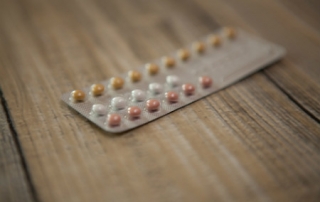
Do Oral Contraceptives Cause Mood Changes?

Many women have concerns about the side effects of oral contraceptives (birth control pills). Potential side effects include bloating, breast tenderness, and weight gain. In addition, some women may experience depression or mood swings, side effects that may influence a woman’s decision to start taking a birth control pill, particularly if she has a history of depression.

By |2015-08-11T12:44:52-04:00May 1st, 2008|Contraception, Depressive Disorders, General|Comments Off on Do Oral Contraceptives Cause Mood Changes?

New Study Does Not Find Link Between Paroxetine and Cardiovascular Defects

In 2006, GlaxoSmithKline (GSK) elected to change product label warnings for the antidepressant paroxetine (Paxil), advising against the use of this drug by women who are pregnant. This decision was based on preliminary studies which suggested an increase in the risk of cardiovascular malformations among infants exposed to paroxetine in utero. A recent study from the Motherisk Program in Toronto has reported on the outcomes of over 3000 paroxetine-exposed infants.

By |2015-08-11T12:19:14-04:00April 23rd, 2008|Antidepressants, Outcomes, Pregnancy & Medications, Risk of Malformations|Comments Off on New Study Does Not Find Link Between Paroxetine and Cardiovascular Defects

SSRIs and Pregnancy: Evaluating New Reproductive Safety Data

Over the past 15 years, multiple studies have addressed the reproductive safety of various antidepressants. Data on the overall teratogenicity of SSRIs has come from relatively small prospective observational studies, larger international birth registries, managed health care databases, and case series; these data have cumulatively supported the reproductive safety of fluoxetine and certain other SSRIs. In a recent meta-analysis including 1774 antidepressant-exposed infants, first trimester exposure to SSRIs was not associated with an increased risk of major malformations above the baseline of 2%-3% seen in the general population (Einarson & Einarson, 2005). The bulk of the data thus far has suggested that SSRIs are not major teratogens; however, concerns about the potential teratogenicity of SSRIs were first raised in 2005 when several preliminary studies suggested that paroxetine may be associated with a small increase in risk of congenital abnormalities.

By |2015-08-11T10:55:05-04:00March 31st, 2008|Antidepressants, Outcomes, Pregnancy & Medications|Comments Off on SSRIs and Pregnancy: Evaluating New Reproductive Safety Data

Bipolar Disorder and Pregnancy: Should Medications Be Discontinued?

As many of the traditional mood stabilizers used to treat bipolar disorder, including lithium and valproic acid, carry some teratogenic risk and the reproductive safety of other medications, including the atypical antipsychotic agents, has not been well-characterized, many women with bipolar disorder decide to discontinue their treatment during pregnancy. A new study from Dr. Adele Viguera and her colleagues at the Massachusetts General Hospital and the Emory University School of Medicine helps to better define the risks associated with discontinuing treatment during pregnancy.

By |2016-03-28T13:38:38-04:00March 7th, 2008|Anti-Epileptic Drugs, Bipolar Disorder, Child Outcomes, Mood Stabilizers, Outcomes, Pregnancy & Medications, Psychiatric Disorders During Pregnancy, Risk of Malformations|Comments Off on Bipolar Disorder and Pregnancy: Should Medications Be Discontinued?

Fertility and Antipsychotic Medications

Infertility is a problem which has gained increased attention over the past several decades. While many factors may contribute to infertility, some medications may also affect reproductive functioning and thus may have an impact on fertility. This post will focus on the antipsychotic drugs, which are now used to treat many psychiatric disorders other than schizophrenia, including insomnia, anxiety disorders, major depression and bipolar disorder.

By |2015-08-11T10:14:05-04:00February 14th, 2008|Infertility and Mental Health, Pregnancy & Medications|Comments Off on Fertility and Antipsychotic Medications
Go to Top