women’s mental health

Antidepressants and Risk for Osteoporosis

Selective serotonin reuptake inhibitors (SSRIs) account for approximately 62% of all antidepressants prescribed in the United States. There have been several recent studies suggesting that SSRIs may lower bone mineral density in individuals over the age of 65. However, depression itself has been shown to decrease bone mineral density and has also been associated with an increased risk of hip fractures in older women.


By |2018-06-17T23:22:37-04:00August 15th, 2008|Antidepressants, Anxiety Disorders, Depressive Disorders, Menopausal Symptoms, Outcomes|Comments Off on Antidepressants and Risk for Osteoporosis

New England Journal of Medicine Case Report: Postpartum Psychosis in a Woman with Bipolar Disorder

The most recent issue of the New England Journal of Medicine includes the presentation of a case from the Center for Women's Mental Health of a woman with bipolar disorder who developed postpartum psychosis after the birth of her child. The case highlights some of the clinical challenges in treating patients with bipolar disorder during pregnancy and the postpartum period and reviews the current literature on postpartum psychosis.

By |2016-03-28T13:23:59-04:00August 11th, 2008|Bipolar Disorder, Diagnosis & Screening, Postpartum Psychiatric Disorders, Postpartum Psychosis, Prevalence & Risk Factors|Comments Off on New England Journal of Medicine Case Report: Postpartum Psychosis in a Woman with Bipolar Disorder

St. John’s Wort: Is it Safe for Pregnancy?

St. John's wort (Hypericum perforatum) is an herbal preparation which has been shown, in some studies, to be effective for the treatment of mild to moderate depressive symptoms. St. John's wort is now one of the most commonly used herbal products in the United States and is widely used in Europe.

By |2015-08-11T14:14:20-04:00August 5th, 2008|Antidepressants, Depressive Disorders, Pregnancy & Medications, Risk of Malformations|Comments Off on St. John’s Wort: Is it Safe for Pregnancy?

Does Depo-Provera Cause Mood Changes?

Depo-Provera (DMPA), also known as the birth control shot, is a highly effective form of contraception that lasts for 3 months, and thus requires only 4 injections per year. DMPA contains a long-lasting form of depot medroxyprogesterone acetate that works as a contraceptive agent by preventing the ovaries from releasing an egg each month. Potential side effects of DMPA include bone density loss, weight gain, and mood worsening. Although depression is listed in the packet insert as a side effect of the injection, available research addressing this side effect are limited and contradictory.

By |2019-03-01T13:36:17-04:00July 29th, 2008|Contraception, Depressive Disorders, General, Hormone Therapy, Prevalence & Risk Factors|Comments Off on Does Depo-Provera Cause Mood Changes?

Maternal Stress During Pregnancy Linked to Infant Sleep Problems

The link between maternal depression and anxiety during pregnancy and adverse neonatal outcome has been well-documented in the medical literature and reviewed on our website. A recent study published in the journal Early Human Development suggests that a mother's stress during pregnancy may also negatively affect her baby's sleep patterns.

By |2015-08-11T14:06:19-04:00July 26th, 2008|Anxiety Disorders, Child Outcomes, Depressive Disorders, Outcomes, Psychiatric Disorders During Pregnancy, PTSD and Stress Related Disorders|Comments Off on Maternal Stress During Pregnancy Linked to Infant Sleep Problems

Psychological Stress During Pregnancy and Risk for Stillbirth

Previous studies have suggested that prenatal stress may be associated with a spectrum of adverse pregnancy outcomes, including preterm birth and low birth weight (reviewed in Hobel et al, 2008). A recent study from Danish researchers has investigated the impact of psychological stress on risk for stillbirth.

By |2015-08-11T14:04:48-04:00July 21st, 2008|Outcomes, Psychiatric Disorders During Pregnancy, PTSD and Stress Related Disorders|Comments Off on Psychological Stress During Pregnancy and Risk for Stillbirth

Oral Contraceptives and the Risk of Blood Clots in Postpartum Women

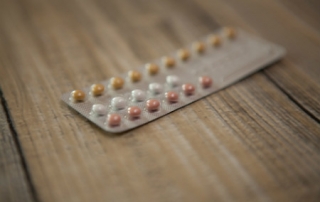
If a woman does not breastfeed following delivery, prolactin levels decrease and fertility returns to normal, and pregnancy is possible. Even if a woman decides to breastfeed, she should still use some form of contraception, as prolactin levels vary depending on individual breastfeeding styles. Women may be fertile and become pregnant even before the resumption of their menstrual cycles.

By |2015-08-11T13:55:37-04:00July 2nd, 2008|Alternative & Complementary, Depressive Disorders, Psychiatric Disorders During Pregnancy, Treatment|Comments Off on Oral Contraceptives and the Risk of Blood Clots in Postpartum Women

Interactions Between Antidepressants and Tamoxifen

Women receiving tamoxifen for the treatment or prevention of breast cancer should be aware of possible drug-drug interactions with specific antidepressant medications (e.g., SSRI). These antidepressants are used widely to treat depression and anxiety disorders. In addition, multiple studies have shown that these antidepressants are an effective non-hormonal treatment for hot flashes; over 25% of women who are experiencing hot flashes related to tamoxifen therapy are now prescribed antidepressants to manage their symptoms.

By |2019-11-03T22:30:23-04:00June 18th, 2008|Antidepressants, Breast Cancer, Outcomes|Comments Off on Interactions Between Antidepressants and Tamoxifen

FDA Proposes Major Revision of Prescription Drug Labeling

The U.S. Food and Drug Administration (FDA) has proposed major revisions to prescription drug labeling in order to provide more accurate and helpful information on the effects of medications used during pregnancy and breastfeeding. As it stands, the current system used by the FDA classifies the reproductive safety of medications using five risk categories (A, B, C, D and X) based on data derived from human and animal studies. While widely used to make decisions regarding the use of medications during pregnancy, many have criticized this system of classification, indicating that this type of drug labeling is often not helpful and, even worse, may be misleading.

By |2015-08-11T13:41:57-04:00June 10th, 2008|Child Outcomes, Neonatal Symptoms, Pregnancy & Medications, Risk of Malformations|Comments Off on FDA Proposes Major Revision of Prescription Drug Labeling
Go to Top