


mood

In Brief: Mothers with Affective Illness (Even In Remission) Have Deficits in Emotional Processing

We have long known that postpartum depression may have negative effects on the child and may contribute to deficits in social development and emotional regulation.  Exactly what mediates these effects is not so clear; however, [...]

By |2018-11-20T14:20:42-04:00November 20th, 2018|Child Outcomes, Postpartum Depression, Postpartum Psychiatric Disorders|Comments Off on In Brief: Mothers with Affective Illness (Even In Remission) Have Deficits in Emotional Processing

Brief Report: TMS for Depression During Pregnancy

Transcranial magnetic stimulation or TMS is similar to ECT but uses electromagnetic pulses to generate electrical current in specific regions of the brain that are known to modulate mood.  TMS is less likely to cause [...]

By |2016-07-20T10:26:15-04:00June 23rd, 2015|Depressive Disorders, Psychiatric Disorders During Pregnancy, Treatment|Comments Off on Brief Report: TMS for Depression During Pregnancy

The Impact of Infertility Treatment on Mood: Some Women are More Vulnerable

While many women complain of psychological distress during infertility treatment, it has been somewhat unclear if the anxiety and depression women may experience is related to having to undergo infertility treatment or to the hormonal agents that are used as part of the treatment, or a combination of the two.   While we know that changing levels of gonadal hormones, like estrogen, may affect mood and anxiety levels, we have very little information on the psychological effects of the hormone-modulating drugs used in assisted reproductive technology (ART).

By |2018-05-15T18:17:52-04:00December 16th, 2014|Depressive Disorders, Infertility and Mental Health|Comments Off on The Impact of Infertility Treatment on Mood: Some Women are More Vulnerable

Do Oral Contraceptives Cause Depression?

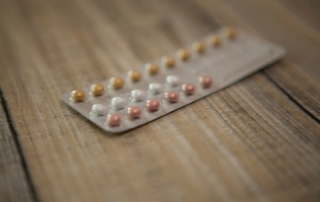
An estimated 80% of sexually active young women in the United States use hormonal or oral contraceptives (OCs).  Clinically it is found that some women report depression or mood swings with oral contraceptives; however, many women seem to tolerate hormonal contraceptive without any effects on mood.  Despite the prevalence of OC usage, few studies have explored the association between hormonal contraceptive use and mood disturbance.

By |2016-07-13T11:30:27-04:00October 14th, 2013|Contraception, Depressive Disorders, General|Comments Off on Do Oral Contraceptives Cause Depression?

Will PMDD Have a New Home in the DSM-V?

The American Psychiatric Association is now considering the possibility of including premenstrual dysphoric disorder (PMDD) in the DSM-V as a new category, rather than listing a set of criteria for PMDD in the appendix (as in DSM-IV).  The diagnostic criteria remain relatively unchanged.  Many feel that the Inclusion of PMDD as a distinct diagnostic category will lead to greater legitimacy for the disorder and will encourage the growth of evidence-based research in this area.

By |2015-08-12T15:17:11-04:00June 1st, 2012|Diagnosis & Screening, PMS & PMDD|Comments Off on Will PMDD Have a New Home in the DSM-V?

Mood and well-being after removal of both ovaries

The risk of depression after removal of both ovaries (also called bilateral oöphorectomy or surgical menopause) is a major factor for women to consider when they confront medical problems that require removal of the uterus (called a hysterectomy).  Many women are advised to consider having their ovaries removed when they are having the uterus removed.  Sometimes removal of the ovaries is required to fully treat the condition leading to surgery, but other times it is suggested as a precaution to reduce the risk of ovarian cancer.  Removal of both ovaries in a premenopausal woman results in an abrupt withdrawal of estrogen, progesterone, and testosterone.  Therefore removing both ovaries (rather than just one or neither ovary) may have significant effects on mood and well-being in women.

By |2015-08-12T14:02:54-04:00February 24th, 2009|Depressive Disorders, Menopausal Symptoms, Prevalence & Risk Factors|Comments Off on Mood and well-being after removal of both ovaries

Does Depo-Provera Cause Mood Changes?

Depo-Provera (DMPA), also known as the birth control shot, is a highly effective form of contraception that lasts for 3 months, and thus requires only 4 injections per year. DMPA contains a long-lasting form of depot medroxyprogesterone acetate that works as a contraceptive agent by preventing the ovaries from releasing an egg each month. Potential side effects of DMPA include bone density loss, weight gain, and mood worsening. Although depression is listed in the packet insert as a side effect of the injection, available research addressing this side effect are limited and contradictory.

By |2019-03-01T13:36:17-04:00July 29th, 2008|Contraception, Depressive Disorders, General, Hormone Therapy, Prevalence & Risk Factors|Comments Off on Does Depo-Provera Cause Mood Changes?

Do Oral Contraceptives Cause Mood Changes?

Many women have concerns about the side effects of oral contraceptives (birth control pills). Potential side effects include bloating, breast tenderness, and weight gain. In addition, some women may experience depression or mood swings, side effects that may influence a woman’s decision to start taking a birth control pill, particularly if she has a history of depression.

By |2015-08-11T12:44:52-04:00May 1st, 2008|Contraception, Depressive Disorders, General|Comments Off on Do Oral Contraceptives Cause Mood Changes?
Go to Top