

depression

Perimenopause May Be a Time of Risk for New Onset Depression

The transition to menopause has typically been considered a time when women may be more vulnerable to mood changes. There have been inconclusive data, however, as to whether women with no lifetime history of depression transitioning to menopause are at increased risk for developing an episode of major depression.

By |2018-07-11T13:57:12-04:00February 10th, 2007|Depressive Disorders, Menopausal Symptoms, Prevalence & Risk Factors|Comments Off on Perimenopause May Be a Time of Risk for New Onset Depression

Depression During Pregnancy is Often Not Treated

While pregnancy has traditionally been considered a time of emotional well-being, recent data indicate that about 10% to 15% of women experience clinically significant depressive symptoms during pregnancy. Furthermore, women with a history of major depression appear to be at high risk for recurrent illness during pregnancy particularly in the setting of antidepressant discontinuation. In a recent study researchers from the University of Michigan report that while depression affects many women during pregnancy the majority of women suffering from this illness do not receive adequate treatment.

By |2018-07-11T14:10:59-04:00February 10th, 2007|Depressive Disorders, Diagnosis & Screening, Prevalence & Risk Factors, Psychiatric Disorders During Pregnancy|Comments Off on Depression During Pregnancy is Often Not Treated

New Research from the CWMH: Relapse of Major Depression during Pregnancy

Over the last decade, the number of reproductive-age women treated for depression has increased significantly. Given the incomplete information available regarding the reproductive safety of many antidepressant medications, many women choose to discontinue pharmacologic treatment during pregnancy. However, several studies estimate that about 10 to 15% of women suffer from depression during pregnancy (O'Hara et al, 1990; Evans et al, 2001). A recent study from the Center for Women's Mental Health indicates that the risk for depression is particularly high among women with histories of major depression (Cohen et al, 2006).

By |2020-11-26T08:41:14-04:00April 22nd, 2006|Depressive Disorders, Outcomes, Prevalence & Risk Factors, Psychiatric Disorders During Pregnancy, Research at CWMH|Comments Off on New Research from the CWMH: Relapse of Major Depression during Pregnancy

Perimenopause: A Time of Risk for Depression

More than 50 percent of women experience some perimenopausal symptoms, including hot flushes, night sweats, and sleep disturbance, before reaching the menopause. A recent article from Aetna Intelihealth notes that many women may also experience depression. In a study form Dr. Claudio Soares, women with clinically confirmed perimenopause were interviewed:

By |2015-07-22T15:15:13-04:00October 22nd, 2005|Depressive Disorders, Menopausal Symptoms, Prevalence & Risk Factors|Comments Off on Perimenopause: A Time of Risk for Depression

Neonatal Symptoms After In Utero Exposure to SSRIs

The increasing number of reproductive-age women taking antidepressants has raised concerns about the potential risks of using these medications during pregnancy. Literature accumulated over the last decade supports the use of certain selective serotonin reuptake inhibitors (SSRIs) and the older tricyclic antidepressants during pregnancy, indicating no increased risk of congenital malformation in children exposed to these medications during the first trimester of pregnancy. Still, questions remain regarding the purported risk for "toxicity" in newborns exposed to antidepressants around the time of labor and delivery. These concerns are not new. Twenty years ago, case reports suggested that maternal use of tricyclic antidepressants near the time of delivery was associated with problems in the newborn such as difficulty feeding, restlessness, or jitteriness.

By |2015-07-22T15:28:43-04:00July 27th, 2005|Anxiety Disorders, Child Outcomes, Depressive Disorders, Neonatal Symptoms, Pregnancy & Medications|Comments Off on Neonatal Symptoms After In Utero Exposure to SSRIs

Oral Contraceptives for the Treatment of Premenstrual Mood Symptoms in Women with Depression

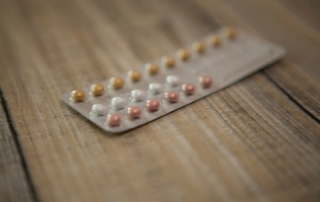
About 3-5% of women of reproductive age suffer from premenstrual dysphoric disorder (PMDD), where they experience depressive symptoms, anxiety or irritability during the last one to two weeks (the premenstrual phase) of their menstrual cycle. In addition, many women who suffer from depression, including those who have been effectively treated with an antidepressant, report worsening of their depressive symptoms during the premenstrual phase of the menstrual cycle. Although this may be a consequence of sensitivity to fluctuating hormone levels, little is known about the efficacy of hormonal interventions, including oral contraceptives (OCPs), in the treatment of premenstrual worsening of depressive symptoms.

By |2016-03-28T13:51:33-04:00June 14th, 2005|Depressive Disorders, Hormone Therapy, PMS & PMDD, Treatment|Comments Off on Oral Contraceptives for the Treatment of Premenstrual Mood Symptoms in Women with Depression

Should SSRIs Be Discontinued Prior to Delivery?

About 10-15% of women suffer from depression during pregnancy. The rates are probably even higher among those women who have histories of depression prior to pregnancy. Thus, many women with recurrent illness make the decision to remain on antidepressant during pregnancy. While there have been many studies supporting the reproductive safety of certain antidepressants, including Prozac and the tricyclic antidepressants, during pregnancy, concerns have emerged as to whether antidepressants, including the selective serotonin reuptake inhibitors (SSRIs), may increase the risk of adverse events in the newborn.

By |2015-07-22T14:41:25-04:00June 13th, 2005|Antidepressants, Child Outcomes, Neonatal Symptoms, Pregnancy & Medications|Comments Off on Should SSRIs Be Discontinued Prior to Delivery?

Acupuncture for Depression During Pregnancy

Depression during pregnancy is relatively common, affecting about 10 to 15% of women. While there is a growing body of literature supporting the reproductive safety of certain antidepressants, our understanding of how these psychotropic medications affect the developing fetus remains incomplete. For this reason, many women and their physicians would prefer to avoid the use of antidepressants during pregnancy; thus, there is a clear need for effective non-pharmacologic treatments for women who suffer from depression during pregnancy. In a recent study from Dr. Rachel Manber and her colleagues at Stanford University, the use of acupuncture is assessed in a group of pregnant depressed women.

By |2015-07-21T11:46:39-04:00February 14th, 2005|Alternative & Complementary, Depressive Disorders, Psychiatric Disorders During Pregnancy, Treatment|Comments Off on Acupuncture for Depression During Pregnancy

Infertility Treatment: A Trigger for Depression and Anxiety

While several studies have demonstrated high levels of psychological distress among women pursuing infertility treatment, few studies have assessed the prevalence of psychiatric illness in populations undergoing infertility treatment using standardized diagnostic instruments. In a recent study from Taipei Veterans General Hospital, a university-affiliated medical center in Taiwan, women attending an assisted reproduction clinic were assessed using the Mini-International Neuropsychiatric Interview (MINI) (Chen 2004) Of the 112 participants, 40.2% met criteria for a psychiatric disorder. The most common diagnosis was generalized anxiety disorder (23.2%), followed by major depressive disorder (17.0%) and dysthymic disorder (9.8%). Participants with a psychiatric disorder did not differ from those without illness in terms of age, education level, income, or years of infertility.

By |2015-07-21T11:30:27-04:00August 18th, 2004|Anxiety Disorders, Depressive Disorders, Infertility and Mental Health, Prevalence & Risk Factors|Comments Off on Infertility Treatment: A Trigger for Depression and Anxiety

Light Therapy for Depression During Pregnancy

Depression during pregnancy (antenatal depression) is relatively common, affecting about 10% of women. While there is a growing body of literature supporting the reproductive safety of certain antidepressants, our understanding of how these psychotropic medications affect the developing fetus remains incomplete. For this reason, antidepressants are typically avoided during pregnancy; thus, there is a clear need for effective non-pharmacologic treatments for women at high risk for antenatal depression.

By |2015-07-20T11:00:36-04:00June 23rd, 2002|Alternative & Complementary, Depressive Disorders, Psychiatric Disorders During Pregnancy, Treatment|Comments Off on Light Therapy for Depression During Pregnancy
Go to Top