

depression

Postpartum Depression Associated with Short Stature in Children

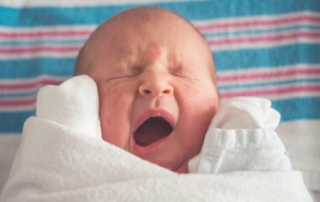
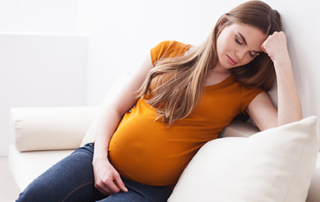
We write often here about the negative effects of postpartum depression on the child.  Most of the studies thus far have focused on behavior and cognitive development; a recent study from researchers at JohnsHopkinsUniversity suggests that being exposed to maternal depression during the first year of life may negatively affect the physical development of the child as well.

By |2015-08-06T09:13:15-04:00July 29th, 2013|Postpartum Psychiatric Disorders|Comments Off on Postpartum Depression Associated with Short Stature in Children

ECT for Postpartum Psychosis

Postpartum psychosis is a rare but serious psychiatric illness, occurring in about 1 to 2 per 1000 women after delivery.  Because postpartum psychosis carries significant risks for both the mother and her child, most women with this illness are psychiatrically hospitalized. Electroconvulsive therapy (ECT) is an effective treatment for postpartum psychosis and may reduce the risks associated with medication exposure in the nursing infant; however, very few research studies have focused on the use of ECT in this setting and it is less commonly used in the United States than in other countries.  A recent study explores the safety and advantages of ECT for the treatment of women hospitalized for postpartum psychosis.

By |2015-08-06T09:26:29-04:00July 11th, 2013|Postpartum Psychiatric Disorders|Comments Off on ECT for Postpartum Psychosis

Does Estrogen Affect Antidepressant Efficacy? Data from the STAR*D Study

We previously reported on studies suggesting estrogen may be helpful for the treatment of depression in peri- and post-menopausal women, either alone or in combination with an antidepressant.  In addition, other studies have suggested that older, postmenopausal women may respond more poorly to antidepressants than premenopausal women. Two recent studies attempt to better understand the impact of reproductive hormones on clinical presentation and treatment response of depression in women.

By |2015-08-06T09:27:57-04:00July 10th, 2013|Depressive Disorders, General, Hormone Therapy, Treatment|Comments Off on Does Estrogen Affect Antidepressant Efficacy? Data from the STAR*D Study

Remote Enrollment Initiated in MGH Study Assessing Mood Symptoms Across Infertility Treatment

We are pleased to announce the recent launch of an exciting new research initiative that is being conducted by the Massachusetts General Hospital Center for Women’s Mental Health.  The Symptom Tracking in Assisted Reproductive Technologies study (START study) will focus on understanding the risk factors for depressive relapse in women undergoing infertility treatments.  There has been a growing request in our clinical work to address the needs of women undergoing infertility treatments.  It is our hope that such a study will provide important information on the course and risk of depression in women undergoing fertility treatment and thus inform clinical care.

By |2016-03-28T13:32:10-04:00May 7th, 2013|Depressive Disorders, Infertility and Mental Health, Prevalence & Risk Factors, Research at CWMH|Comments Off on Remote Enrollment Initiated in MGH Study Assessing Mood Symptoms Across Infertility Treatment

SSRI Exposure During Pregnancy Does Not Appear to Affect Infant Growth

Some studies have shown an association between in utero exposure to antidepressants and various pregnancy outcomes, including preterm delivery, low birth weight, and lower Apgar scores; however, these outcomes have also been observed in infants born to depressed mothers who are not taking medication. Thus, it has been difficult to determine if there is a causal relationship between antidepressant exposure and these negative pregnancy outcomes or if untreated maternal depression is itself responsible for these negative outcomes. 

By |2015-08-06T11:14:10-04:00April 18th, 2013|Antidepressants, Outcomes, Pregnancy & Medications, Pregnancy Outcomes|Comments Off on SSRI Exposure During Pregnancy Does Not Appear to Affect Infant Growth

Hormonal Treatments for Breast Cancer: Do They Cause Depression?

Aromatase inhibitors (AIs) are the preferred hormonal therapy for postmenopausal women with estrogen sensitive breast cancer.  While the selective estrogen receptor modulators (SERMs), such as tamoxifen and raloxifene, are used in premenopausal women with estrogen sensitive breast cancer, the aromatase inhibitors (e.g., anastrozole, letrozole, and exemestane) have been shown to be more effective and safer than the SERMs in postmenopausal women. 

By |2015-08-06T11:57:42-04:00April 9th, 2013|Breast Cancer, Depressive Disorders, Hormone Therapy, Menopausal Symptoms|Comments Off on Hormonal Treatments for Breast Cancer: Do They Cause Depression?

L-Methylfolate for the Treatment of Depression: Can We Use it During Pregnancy?

Last summer, we posted a blog about using folate to treat (and perhaps prevent) depression in women of childbearing age.  Supporting that recommendation are the several reports indicating that people with lower folate levels are at higher risk of major depression or may experience more severe depressive symptoms.  Other studies have indicated that in folate-deficient patients, antidepressants may be less effective or may take longer to take effect.

By |2018-06-15T10:45:27-04:00March 25th, 2013|Outcomes, Pregnancy & Medications|Comments Off on L-Methylfolate for the Treatment of Depression: Can We Use it During Pregnancy?

Antidepressants and Pregnancy: A Meta-Analysis Puts the Risks into a Larger Context

While some studies have shown an association between in utero exposure to antidepressants and various pregnancy outcomes, including preterm delivery, low birth weight, and lower Apgar scores, these outcomes have also been linked to untreated maternal depression. Thus, it has been difficult to determine if there is a causal relationship between antidepressant exposure and negative pregnancy outcomes or whether maternal depression is itself responsible for these negative outcomes.

By |2015-08-06T13:22:16-04:00March 1st, 2013|Antidepressants, Outcomes, Pregnancy & Medications, Pregnancy Outcomes|Comments Off on Antidepressants and Pregnancy: A Meta-Analysis Puts the Risks into a Larger Context

Screening for Peripartum Anxiety Disorders: What Are the Best Screening Tools?

A significant number of women experience anxiety symptoms during pregnancy, with about 8.5% of women meeting criteria for generalized anxiety disorder.  Other anxiety disorders are less common.   The estimated prevalence of panic disorder during pregnancy is 1-2%.   The estimated prevalence of obsessive-compulsive disorder is 0.2-1.2%.  While we use certain tools, including the Edinburgh Postnatal Depression Scale (EPDS) to screen for depression during pregnancy, what are the best tools for indentifying women with clinically significant anxiety symptoms?

By |2025-12-11T09:48:24-04:00February 12th, 2013|Anxiety Disorders, Diagnosis & Screening, Postpartum Psychiatric Disorders, Psychiatric Disorders During Pregnancy|Comments Off on Screening for Peripartum Anxiety Disorders: What Are the Best Screening Tools?
Go to Top