

In This article
- Parents of infants hospitalized in the NICU experience high rates of depression, anxiety, stress, and trauma-related symptoms.
- Despite growing recognition of these concerns, mental health screening and treatment remain inconsistent across NICUs.
- Screening is only the first step; parents who screen positive need access to appropriate support and treatment.
- Carousel Care provides a framework for integrating family mental health into routine NICU care, including screening, education, bonding support, and connections to mental health services.
- Research suggests that psychotherapy and emotional support are particularly effective, while family-centered care, education, and bonding interventions can also improve parental mental health and may be more feasible to incorporate into routine NICU care.
October is National Depression and Mental Health Screening Month. This month, we are highlighting both the benefits and limitations of screening for mood and anxiety disorders during pregnancy and the postpartum period.
In 2015, the American College of Obstetricians and Gynecologists recommended screening women for depression and anxiety during pregnancy and the postpartum period. These recommendations have increased awareness of perinatal mood and anxiety disorders (PMADs) and encouraged healthcare systems to develop screening programs. But screening is only the first step. Once we identify someone who is struggling, we need to have appropriate services available to provide support and treatment.
This is particularly important for parents whose infants are hospitalized in the neonatal intensive care unit (NICU). When an infant is critically ill, understandably, the focus of the medical team is on the baby. But in the midst of this intensive medical care, are we doing enough to support the mental health of the parents?
The Emotional Impact of a NICU Admission
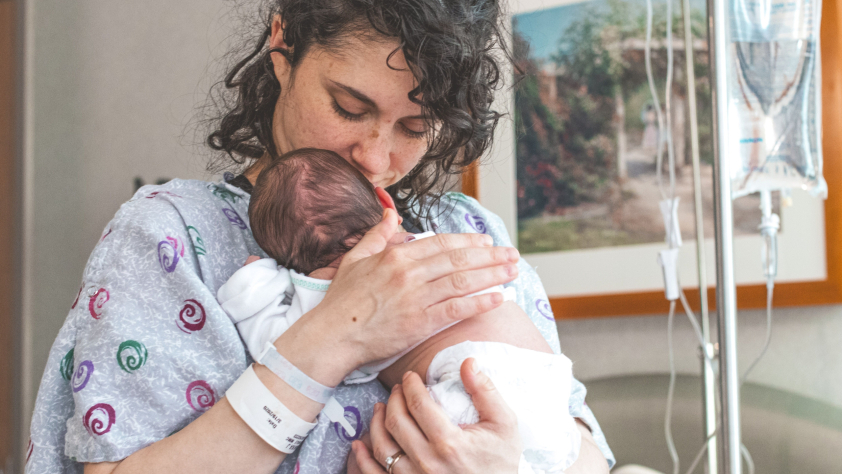
Admission to the NICU can be an intensely distressing experience for parents and families. Parents may be coping with fear about their infant’s health, an unexpected or traumatic birth, separation from their baby, disrupted opportunities for bonding, and having to make difficult decisions about medical care. For some families, these experiences can have lasting effects on mental health.
Depression, anxiety, and posttraumatic stress symptoms are common among parents of infants hospitalized in the NICU. Estimates vary considerably depending on the population studied and the methods used to assess symptoms, but studies have reported substantial rates of depression, anxiety, and posttraumatic stress among NICU parents.
These symptoms matter not only because of their impact on parents. Parental mental health can influence parent-infant bonding, participation in the infant’s care, and the transition from the NICU to home. Supporting parents is therefore an important part of supporting the developing infant and the family as a whole.
Yet mental health care has not traditionally been a routine component of NICU care.
Screening Is Still Inconsistent
Although there is increasing recognition of the mental health needs of NICU parents, screening practices remain highly variable.
A 2024 survey of Children’s Hospitals Neonatal Consortium (CHNC) NICUs illustrates the problem. Of the 44 level IV NICUs surveyed, 34 (77%) responded.
- 41% of the centers perform screening with validated tools
- 38% of the centers have NICU-dedicated mental health personnel
- Repeat screening practices were highly variable
The authors concluded that developing a sustainable approach to identifying and addressing parental mental health concerns will likely require additional mental health professionals working within NICUs.
Why is screening so difficult to implement? The barriers are familiar: healthcare professionals may have limited training or experience in recognizing and addressing parental mental health problems; mental health professionals may not be available within the NICU or through referral networks; and there may be practical and financial challenges associated with providing mental health services to a parent when the infant is the identified patient.
Screening without access to treatment creates another problem. Identifying depression, anxiety, or trauma symptoms is important, but screening alone does not improve outcomes. We need systems that connect parents with appropriate support when a problem is identified.
A New Approach to Mental Health Care in the NICU
Recognizing this gap, the American Academy of Pediatrics Trainees and Early Career Neonatologists (AAP TECaN) developed Carousel Care, a national advocacy campaign focused on making family mental health part of standard NICU care.
Carousel Care is not a single treatment program. Rather, it provides a framework for developing NICU systems that recognize and address the emotional and psychological needs of families. Its framework encompasses:
- Recognition of depression, anxiety, PTSD and other mental health problems
- Psychosocial screening of parents
- Mental health interventions during the NICU admission
- Support for bonding and attachment
- Support during transition from NICU to home
- Bereavement care
- Support for NICU staff/caregivers
- Development of institutional programs and policies
Carousel Care is a call to action rather than evidence that a standardized model has already been adopted and implemented across NICUs. Because there is currently no universally accepted standard of care for addressing PMADs among NICU families, there is an urgent need for the development of sustainable, feasible systems in which mental health is considered an essential component of NICU care.
What Can NICUs Do to Support Parents?
A recent systematic review and meta-analysis published in JAMA Pediatrics provides some encouraging information about what might work. The researchers reviewed 160 studies involving 16,639 parents and evaluated interventions delivered while infants were hospitalized in the NICU. The interventions included psychotherapy and emotional support, family-centered care and education, interventions designed to promote parent-infant bonding, expressive and artistic therapies, and meditation and other holistic interventions.
Psychotherapy and emotional support had the most consistent benefits across mental health outcomes. These interventions reduced symptoms of anxiety, stress, and depression.
Family-centered care and education also reduced anxiety and stress, while bonding interventions reduced anxiety. The important point is that effective support does not necessarily require intensive psychiatric treatment for every family. Some interventions can be incorporated into routine NICU care—for example, educating parents, involving them in their infant’s care, facilitating parent-infant contact and bonding, and providing emotional support.
These findings suggest that a stepped approach to mental health care may be particularly useful in the NICU. All families can benefit from family-centered care, education, support for bonding, and attention to their emotional well-being. Screening can help identify parents who need additional support.
Parents with more significant symptoms can then be referred for psychotherapy or other mental health treatment, while those with more severe depression, anxiety, trauma-related symptoms, or other psychiatric disorders may require evaluation and treatment by clinicians with expertise in perinatal mental health.
This approach may also be more feasible than trying to provide a psychiatrist or psychotherapist to every NICU family. The JAMA Pediatrics authors specifically highlight interventions that require relatively few additional resources, such as family-centered care and education. At the same time, the findings should not be interpreted to mean that specialized mental health professionals are unnecessary. Rather, NICUs need systems or care pathways that allow families with more complex needs to access clinicians with appropriate expertise.
Moving Beyond Screening
The progress made in perinatal mental health screening over the last decade is important. But the experience of NICU families reminds us that screening is only the beginning.
For a parent whose baby is critically ill, a positive depression or anxiety screen may be the first indication that they need help. The next question should be: What happens now?
We need models of NICU care in which the emotional health of parents is considered alongside the medical health of their infants. This does not mean that every NICU needs to provide intensive psychiatric treatment on site. It does mean that NICUs should have a systematic approach to identifying distress, providing basic psychosocial support, facilitating parent-infant bonding, and connecting parents with mental health professionals when additional treatment is needed.
The goal is not simply to screen more parents. The goal is to ensure that when we identify a parent who is struggling, we have something meaningful to offer. As the evidence continues to grow, integrating mental health support into routine NICU care may become an essential part of caring for the entire family.
—Ruta Nonacs, MD PhD