

In This article
- Postpartum psychosis affects 1–2 per 1,000 births and requires urgent evaluation and treatment.
- Risk is higher in those with bipolar disorder, but 40% of affected individuals have no prior psychiatric history.
- Early recognition by family members and clinicians can significantly improve outcomes.
- Recovery starts with appropriate treatment, along with support from family and community.
- Ongoing research, including the MGH Postpartum Psychosis Project, aims to improve prevention and care.
- Resources are available to help patients and families.
Among the perinatal mood and anxiety disorders, postpartum psychosis is the least common, but it is by no means rare. Postpartum psychosis occurs in about 1 to 2 per thousand new mothers. It is more common than sudden infant death syndrome (SIDS), yet many new mothers and their families are unaware of this serious postpartum complication. Instead public awareness is shaped by tragic and highly publicized cases, which can obscure a more nuanced understanding of the illness.
As researchers and clinicians, there is so much we do not yet understand about postpartum psychosis. While many women with postpartum psychosis have bipolar disorder, just as many who experience postpartum psychosis have no history of psychiatric illness. There are many unanswered questions. What are the factors that contribute to postpartum psychosis? What is the best treatment? How can we prevent it?
In an effort to gain more nuanced information on postpartum psychosis, the Center for Women’s Mental Health launched the MGH Postpartum Psychosis Project. We now have the world’s largest cohort of individuals who have had postpartum psychosis
We continue to recruit women who have experienced postpartum psychosis for this study. If you are interested in learning more about or participating in this study, please visit the MGH POSTPARTUM PSYCHOSIS PROJECT website.
What Moms and Their Families Need to Know
Postpartum psychosis is a psychiatric emergency, but it is also treatable, survivable, and, in some cases, preventable—particularly when risk factors are recognized and care is initiated early.
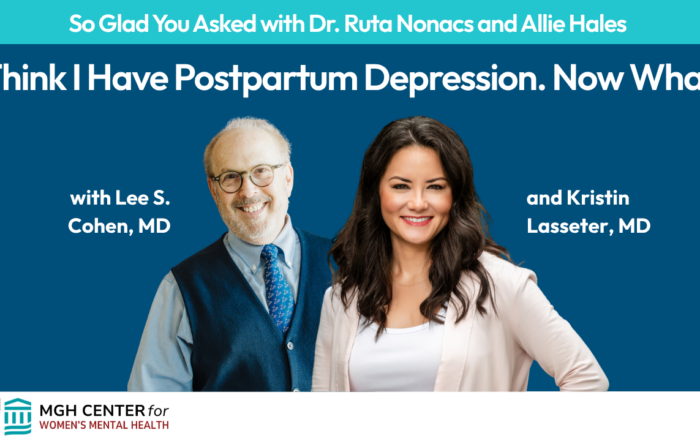
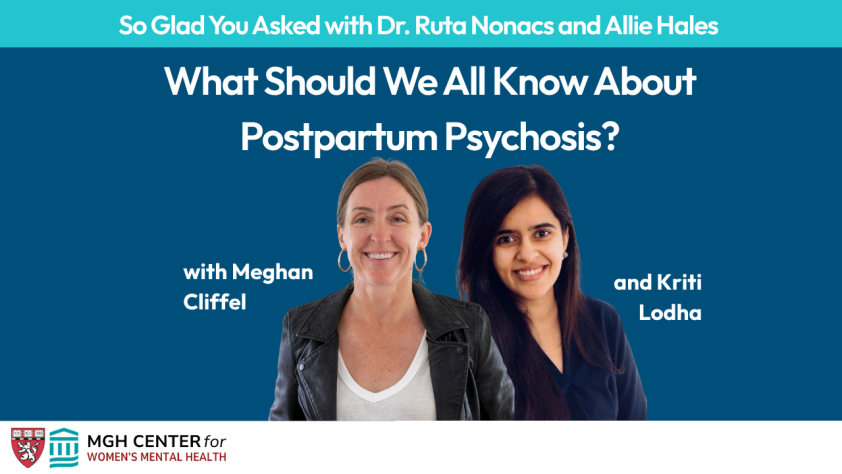
In our latest episode of So Glad You Asked, Allie and I speak with Kriti Lodha and Meghan Cliffel, both survivors of postpartum psychosis. They share their personal experiences with incredible clarity and generosity, helping us to better understand what patients, families, and clinicians need to know about recognizing postpartum psychosis, seeking care, and supporting recovery.
We are deeply grateful to Meghan and Kriti for sharing their stories and for their commitment to increasing awareness and reducing stigma.
This episode may be especially helpful for:
- Pregnant and postpartum individuals, particularly those with a history of bipolar disorder or prior postpartum psychiatric illness
- Partners, family members, and support people who want to recognize early warning signs
- Clinicians caring for perinatal patients
- Anyone seeking a clearer, evidence-based understanding of postpartum psychosis
Most importantly, these stories are incredibly inspiring and highlight the possibility of recovery. Even after a severe and frightening illness, individuals can and do heal, when provided with the right treatment and support.
Please consider sharing this podcast episode with patients, colleagues, and loved ones. Increasing awareness of postpartum psychosis can support earlier recognition, improved access to care, and better outcomes for moms and their families.
—Ruta Nonacs, MD PhD
Resources
- NEED IMMEDIATE HELP? Call the National Maternal Mental Health Hotline at 1-833-TLC-MAMA
- Get Help for Postpartum Psychosis: Information and Resources from PSI
- Join a free, virtual PSI PPP Support Group for survivors and family members
- Learn more about the largest research study of PPP survivors at the MGH Postpartum Psychosis Project
- Direct provider questions about PPP to the MGH Postpartum Psychosis Consult Line for a free consultation staffed by MGH reproductive psychiatrists