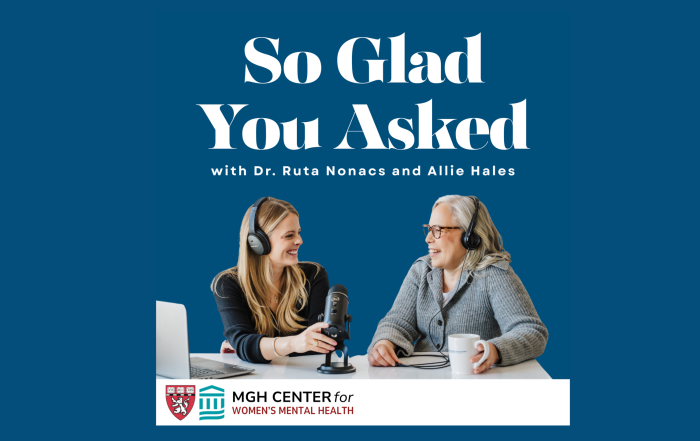


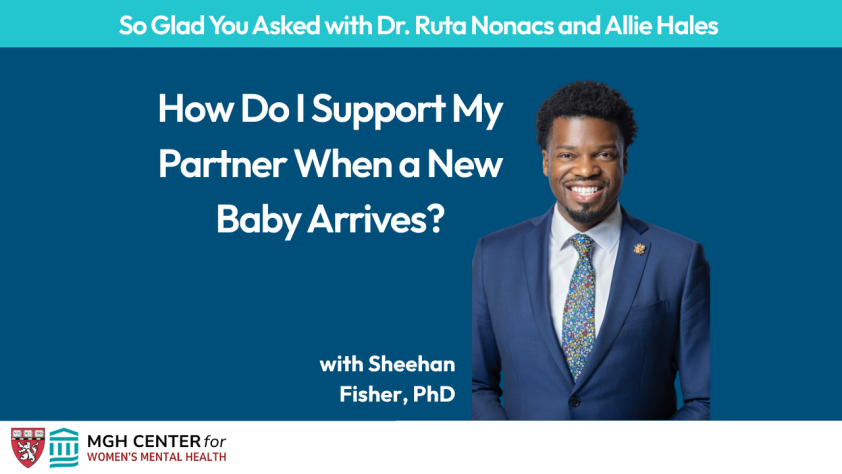
In this week’s episode of our podcast So Glad You Asked, Allie and I sit down with Dr. Sheehan Fisher to talk about partners’ mental health during the perinatal period. Partners—whether they are fathers, non-birthing parents, or other caregivers—play a crucial role in supporting both the birthing parent and the baby. Yet while much of the focus has traditionally been on mothers, far less attention has been paid to the emotional and mental health challenges partners themselves face.
Sheehan Fisher, PhD, is a perinatal clinical psychologist and Associate Professor of Psychiatry and Behavioral Sciences at Northwestern University Feinberg School of Medicine, where he specializes in the mental health of all parents during the perinatal period. His research examines how parental mental health—especially fathers’ mental health—shapes family dynamics and children’s outcomes, and he directs a Fathers’ Mental Health Specialty Clinic that provides care tailored specifically to dads.
In this episode, we explore several key themes from Dr. Fisher’s clinical work and research translated into everyday language for parents and families:
- How parents’ mental health is deeply interconnected
- How traditional gender roles still create unequal burdens at home
- How fathers’ and partners’ mental health is often overlooked and underserved
- Strategies that couples can use to promote open, honest conversations about stress
- Why health care systems need to include both parents and all family structures
Dr. Fisher emphasizes that clinicians and health systems need to move toward a more inclusive, holistic approach that supports all parents and recognizes diverse family structures. Even in settings where the birthing parent is the primary patient—such as OB/GYN visits—providers can make a meaningful difference by acknowledging and engaging the partner, inviting their questions, and including them in conversations about stress and support. He also calls for moving away from strictly heteronormative assumptions in forms, language, and screening, so that every kind of family feels seen, respected, and supported in perinatal care.
—Ruta Nonacs, MD PhD