

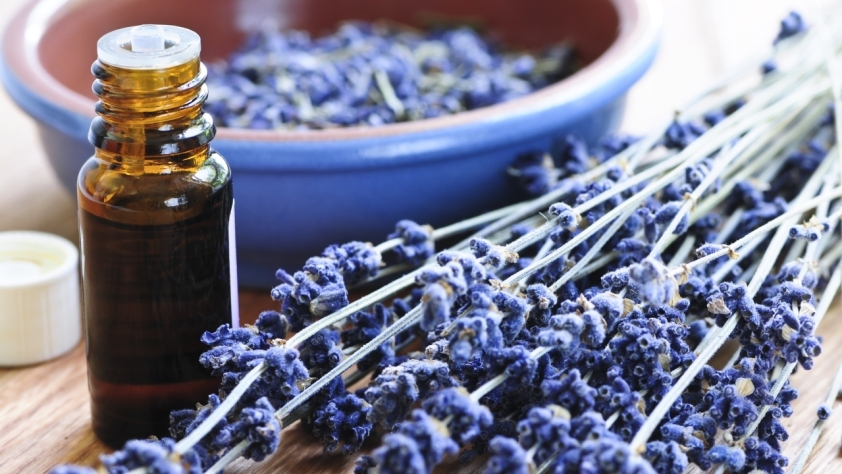
Lavender has long been used to treat an array of symptoms, including stress, anxiety, depression, and insomnia. The use of lavender has been most deeply explored in Mediterranean and Middle Eastern/Islamic cultures. Over time, lavender became central to European folk remedies for nervousness and sleep. The use of lavender spread eastward from the Mediterranean and Middle East and was incorporated into some Asian traditional practices as a “cooling” herb used to calm the mind (Shen) and relieve restlessness and heat?related symptoms.
In clinical and traditional treatments, lavender is most often used as an essential oil administered by inhalation (aromatherapy), diluted with a carrier oil and applied to the skin, or orally (prepared as a tea or in capsule form).
While many may tout the benefits of lavender, is there evidence to support its use?
Lavender for the Treatment of Generalized Anxiety
Perhaps the most competing evidence comes from two randomized controlled trials (in non-perinatal populations) where patients with generalized anxiety disorder (GAD) were treated with lavender essential oil (in capsule form), paroxetine, lorazepam, or placebo. The oral preparation used in these studies was Silexan, a proprietary essential oil from Lavandula angustifolia flowers. The main active constituents of Silexan are linalool and linalyl acetate (which is rapidly hydrolyzed to linalool in vivo). Silexan has been approved in Germany and several other countries for the oral treatment of anxiety.
Silexan versus lorazepam (Woelk & Schlafke, 2010): In this multi?center, double?blind RCT, adults with DSM?defined GAD were treated with silexan 80 mg/day or lorazepam 0.5 mg/day for 6 weeks.? Mean scores on the Hamilton Anxiety Rating Scale (HAM-A-total score) decreased to a similar extent in both groups: 11.3±6.7 points (45%) in the silexan group compared to 11.6±6.6 points (46%) in the lorazepam group. Silexan was well tolerated without sedation or potential for abuse.
Silexan versus paroxetine or placebo (Kasper et al, 2014): In this randomized double?blind clinical trial including 539 adults with GAD, participants received Silexan (160 mg or 80 mg), paroxetine 20 mg, or placebo for 10 weeks.? Participants receiving the higher dose of Silexan (160 mg/day) experienced the greatest reduction in anxiety symptoms; 60.3% had a greater than 50% reduction in HAM-A total scores compared to 51.9% for Silexan 80 mg/day, 43.2% for paroxetine, and 37.8% for placebo. In addition, Silexan showed a pronounced antidepressant effect and improved general mental health and health-related quality of life.
Use of Lavender Oil in Pregnant and Postpartum Populations
A 2024 review documents the results of six studies (including five RCTs) examining the effects of lavender essential oil on anxiety, stress, and sleep quality in a total of 413 pregnant women. All of the studies noted beneficial effects of lavender essential oils on anxiety, stress, and sleep quality used in late pregnancy (during the 2nd and 3rd trimesters). In these studies, lavender oil was administered either by inhalation (aromatherapy) or topical application.
In another randomized clinical trial conducted in Iran (Kianpour et al, 2016), 140 pregnant women were recruited and received either aromatherapy with lavender oil or standard postpartum care immediately after delivery. The aromatherapy intervention consisted of inhaling three drops of lavender essential oil (applied to a cotton ball) every 8 hours for a total of 4 weeks. At 2 weeks, 1 month and 3 months postpartum, levels of stress, anxiety, and depression were lower in the group receiving aromatherapy compared to the control group.
A systematic review and meta-analysis identified three studies in the literature examining the use of lavender oil for sleep problems in postpartum women. In all of these studies, the use of lavender (either as aromatherapy or prepared as a tea) was associated with improvements in sleep quality.
While these studies suggest that lavender oil may be helpful for stress, anxiety, depression, and sleep, more research is needed. All of the studies were performed in countries where there is greater acceptance of alternative treatments, and it is unclear if the findings would be generalizable to populations that have different attitudes toward herbal remedies or dietary supplements. In addition, while many of the studies were randomized controlled trials, most of the studies in pregnant and postpartum women used lavender oil in aromatherapy. One might hypothesize that the rituals surrounding aromatherapy itself may have benefits (whether or not lavender oil is used). Furthermore, the studies were not blinded; participants were aware that they were receiving the active treatment, a fact that may have influenced results.
Further randomized controlled trials using more rigorous blinding strategies, more consistent methodology, larger sample sizes and longer follow-up periods are needed.
What About Safety in Pregnant and Nursing Women?
Dietary supplements do not require extensive pre-marketing approval from the U.S. Food and Drug Administration. Manufacturers are responsible to ensure the safety, but are not required to prove the safety or effectiveness of dietary supplements before they are marketed.
Because information regarding the use of lavender oil in pregnant and breastfeeding women is lacking, the manufacturer of Silexan (lavender oil in capsule form) does not recommend using Silexan during pregnancy or while breastfeeding. While less exposure may be associated with the use of lavender oil when inhaled or applied to the skin, absorption does occur. Furthermore, levels of exposure may vary considerably due to various factors, including the purity of the essential oil and how it is administered.
Although aromatherapy using different types of essential oils, including lavender, is widely used and considered by many to be safe, there is, in fact, very little information on the safety of inhaled essential oils. A critical review in Clinical Obstetrics and Gynecology surveyed adverse events reported in RCTs and observational studies using essential oils (including lavender and peppermint oil) for nausea and vomiting in pregnancy, labor pain, and anxiety. The review concluded that while short?term inhalation of certain essential oils (including lavender oil) appears generally to be well tolerated and is probably safe, robust safety data, especially for first?trimester exposure and for specific essential oils, are lacking.
Data from LactMed indicates that in nursing mothers taking oral preparations of lavender oil, several different components of lavender oil can be detected in the breast milk at varying concentrations. No adverse events have been reported in nursing infants, although this has not been systematically studied.
– Ruta Nonacs, MD PhD
References
Kasper S, Gastpar M, Müller WE, Volz HP, Möller HJ, Schläfke S, Dienel A. Lavender oil preparation Silexan is effective in generalized anxiety disorder–a randomized, double-blind comparison to placebo and paroxetine. Int J Neuropsychopharmacol. 2014 Jun;17(6):859-69.
Kianpour M, Mansouri A, Mehrabi T, Asghari G. Effect of lavender scent inhalation on prevention of stress, anxiety and depression in the postpartum period. Iran J Nurs Midwifery Res. 2016 Mar-Apr;21(2):197-201.
Müller WE, Sillani G, Schuwald A, Friedland K. Pharmacological basis of the anxiolytic and antidepressant properties of Silexan®, an essential oil from the flowers of lavender. Neurochem Int. 2021 Feb;143:104899.
Müller WE, Sillani G, Schuwald A, Friedland K. Pharmacological basis of the anxiolytic and antidepressant properties of Silexan®, an essential oil from the flowers of lavender. Neurochem Int. 2021 Feb;143:104899.
Seiiedi-Biarag L, Mirghafourvand M. The effect of lavender on mothers sleep quality in the postpartum period: a systematic review and meta-analysis. J Complement Integr Med. 2022 Jan 24;20(3):513-520.
Vidal-García E, Vallhonrat-Bueno M, Pla-Consuegra F, Orta-Ramírez A. Efficacy of Lavender Essential Oil in Reducing Stress, Insomnia, and Anxiety in Pregnant Women: A Systematic Review. Healthcare (Basel). 2024 Dec 5;12(23):2456.