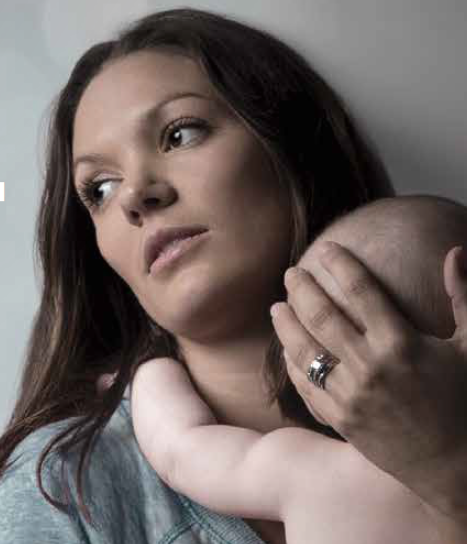
There has been much excitement over the last few years about several new treatments for postpartum depression (PPD), specifically the novel neurosteroid antidepressants brexanolone (Zulresso) and zuranolone (Zurzuvae) approved by the FDA for the treatment of moderate to severe PPD.
One of the most exciting things about brexanolone and zuranolone is the rapidity of the response, typically with improvements seen within a few days. In contrast, traditional antidepressants, including serotonin-selective and serotonin-norepinephrine reuptake inhibitors (SSRIs and SNRIs), while effective for the treatment of PPD, typically take 2 to 4 weeks, sometimes even longer, to take effect. Thus, antidepressant agents with a rapid onset of action are appealing to women with more severe PPD, including those with suicidality or symptoms that interfere with their ability to care for their new child.
Another advantage of zuranolone is that the recommended course of treatment is only 14 days, compared to at least six months of treatment with a traditional antidepressant.
So for a new mother with moderate to severe postpartum depression, should one consider the new kid on the block — zuranolone — or a traditional antidepressant?
Comparing the Efficacy of Zuranolone to SSRIs
There are no head-to-head comparisons of zuranolone with other antidepressants. In order to compare the efficacy of zuranolone to SSRIs for the treatment of PPD, Meltzer-Brody and colleagues analyzed data from existing randomized controlled trials and used matching-adjusted indirect comparison (MAIC). The researchers identified randomized controlled trials (RCTs) examining the efficacy of zuranolone and SSRIs for the treatment of postpartum depression. Improvements in depressive symptoms were measured using the Edinburgh Postnatal Depression Scale (EPDS) and the 17-item Hamilton Rating Scale for Depression (HAMD-17) on Days 3, 15, 28, 45.
Larger reductions in EPDS scores were observed among zuranolone-treated vs. SSRI-treated patients from Day 15 onward. Zuranolone-treated (vs. SSRI-treated) patients exhibited a 4.22-point larger reduction in EPDS scores by Day 15 (95% confidence interval: -6.16, -2.28). At day 45, zuranolone-treated patients had a 7.43-point larger reduction in EPDS scores (-9.84, -5.02).
Clinical Implications
The results of this study indicate that, by Day 15 (after completion of the recommended 14-day course of treatment for zuranolone), patients treated with zuranolone experienced a larger reduction in depressive symptoms compared to those treated with SSRIs. Zuranolone-treated patients continued to show a reduction in depressive symptoms and also experienced greater improvements in depressive symptoms at subsequent time points.
And this study confirms that zuranolone clearly has a more rapid onset than SSRIs.
So based on these findings, one would select zuranolone, right? Well, there may be other things to consider:
Cost and Access to Medication: The cost of the full 14-day course of zuranolone treatment is about $15,900. Just for comparison, a 1-month supply of sertraline (Zoloft) will cost you $8.98 at Price Chopper (without insurance). Some but not all insurance companies cover the cost of zuranolone; there are also financial assistance programs, such as the Zurzuvae Savings Card Program, that are available to help patients access zuranolone.
Another important thing to note is that the patient can’t just bring their prescription into the local pharmacy. The provider needs to submit a request to a specialty pharmacy, a process that may cause delays in initiating treatment.
History of Treatment Response: Long before brexanolone and zuranolone hit the market, we have recommended that women with PPD should be treated with antidepressants that have worked for them in the past (even if the episode of depression was not associated with pregnancy or the postpartum). If a woman has responded to and tolerated sertraline in the past, there is no reason to try something different if she experiences PPD.
Breastfeeding: At the present time, there is no data regarding the use of zuranolone while breastfeeding, and the manufacturer recommends that women suspend breastfeeding for at least two weeks while taking the medication. In contrast, there are no restrictions regarding the use of sertraline and other SSRIs in breastfeeding women with healthy, full-term infants.
Comfort Level: While some would like to try the newest medication and one that is specifically FDA-approved for PPD, many women with PPD are understandably reluctant to try a medication that is so new. Some patients and providers have also been hesitant to try zuranolone, given its boxed warning that cautions patients that zuranolone may impair driving.
Zuranolone and Brexanolone are Not the Only Effective Treatments for PPD
Yes, at the present time, there are the only two medications that have been approved by the FDA for the treatment of postpartum depression: brexanolone (Zulresso) and zuranolone (Zurzuvae).
However, these are not the only options for the treatment of postpartum depression. There are studies to support the use of SSRIs and SNRIs, as well as other antidepressants, in this setting. Traditional antidepressants may take longer than zuranolone and brexanolone to take effect; however, they are effective, easy to obtain, well-tolerated, compatible with breastfeeding, and, most importantly, effective.
Ruta Nonacs, MD PhD
References
Meltzer-Brody S, Gerbasi ME, Mak C, Toubouti Y, Smith S, Roskell N, Tan R, Chen SS, Deligiannidis KM. Indirect comparisons of relative efficacy estimates of zuranolone and selective serotonin reuptake inhibitors for postpartum depression. J Med Econ. 2024 Jan-Dec; 27(1):582-595.